<Final Project: Image Quilting
Yuze Zhang
Randomly Sampled Texture
Objective: Generate a basic output texture using randomly sampled patches from the input texture to
understand the foundational process of texture synthesis.
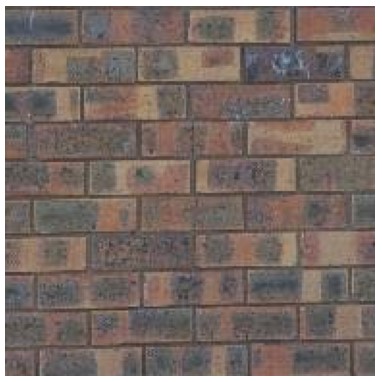
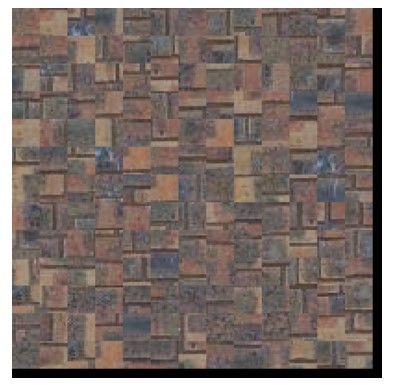
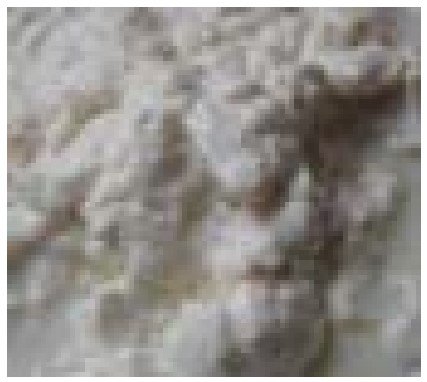
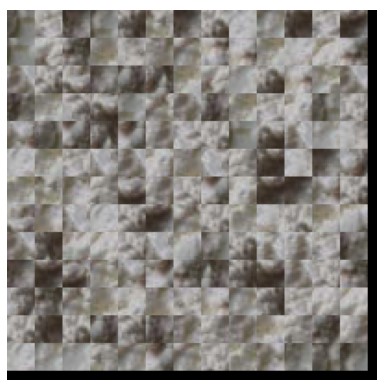
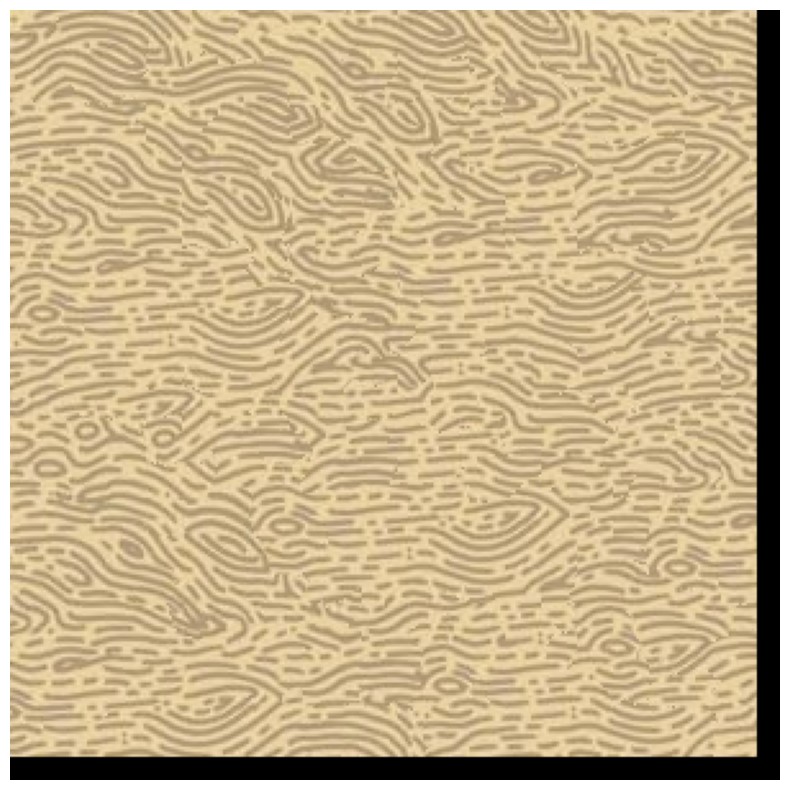
This step involves generating an output image by randomly sampling square patches from a given input texture sample.
The patches are tiled sequentially starting from the upper-left corner until the output image size is reached. Any
remaining space that cannot be filled with a full patch is left with black borders. First, I will match the element
in the top-left corner of the image to the top-left corner of the output. Then, recursively in row and column order,
each patch will be filled with random patches from the original image. In this step, we do not need to consider the
overlap between patches.
Results
origin
Ramdom Sampled Texture
origin
Ramdom Sampled Texture
Overlapping Patches
Objective: Improve texture coherence by using overlapping regions between patches and selecting patches
based on similarity.
In this step, overlapping patches are used to ensure better coherence between adjacent patches. Overlapping regions
are evaluated based on their similarity using the Sum of Squared Differences (SSD). Patches are chosen randomly from
those with SSD costs below a defined threshold (tol) To enhance the generative capability of the algorithm, we select
the tol patches with the lowest cost and randomly choose one from these patches to fill in. When tol is large, the
algorithm has stronger generative ability, but mismatched patterns may occur; when tol is small, the patterns are more
uniform, but the ability to generate new content is limited.
Results
origin
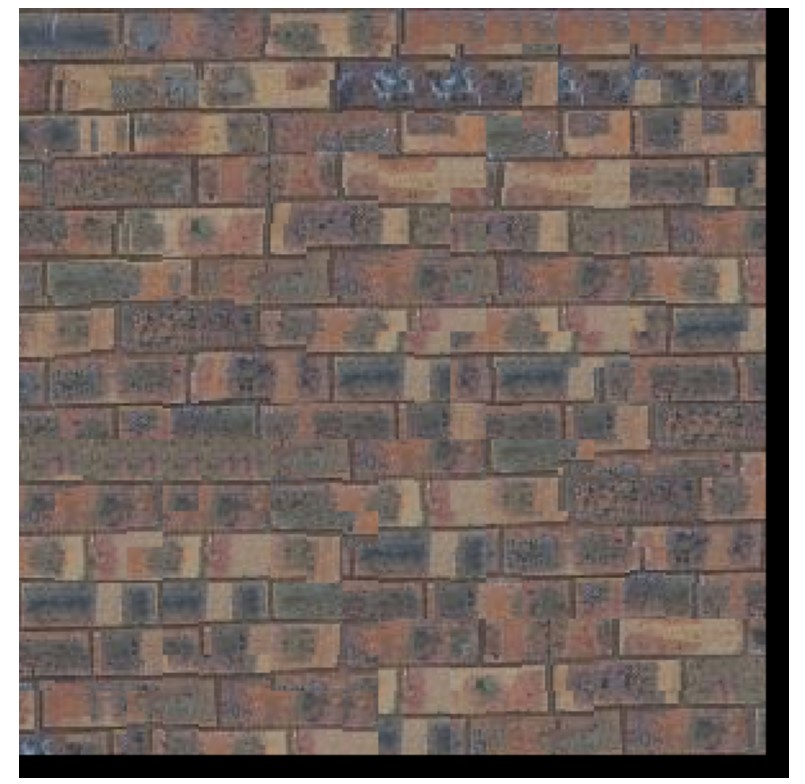
quilt simple tol=5
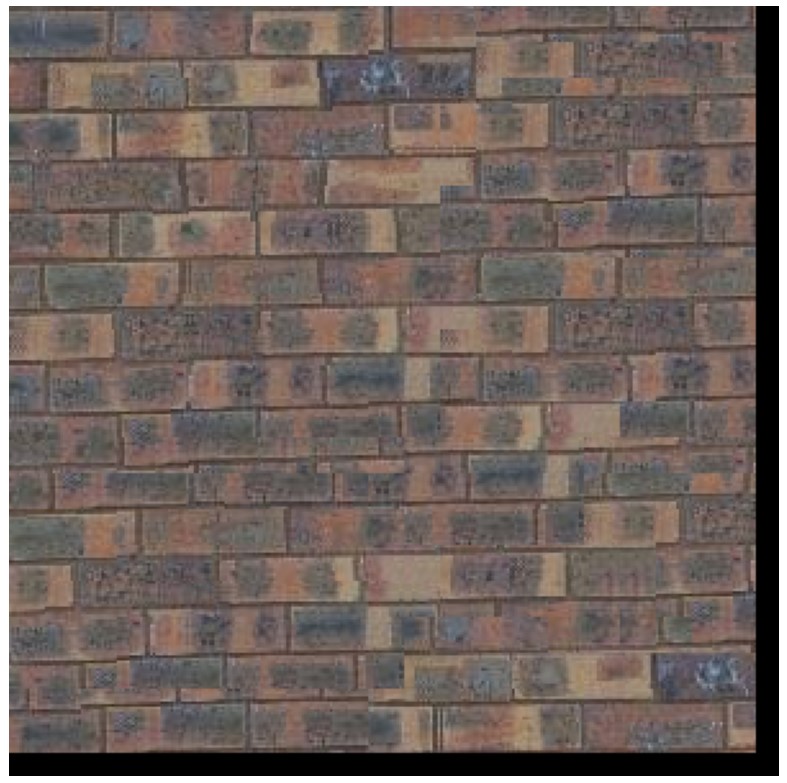
quilt simple tol=3
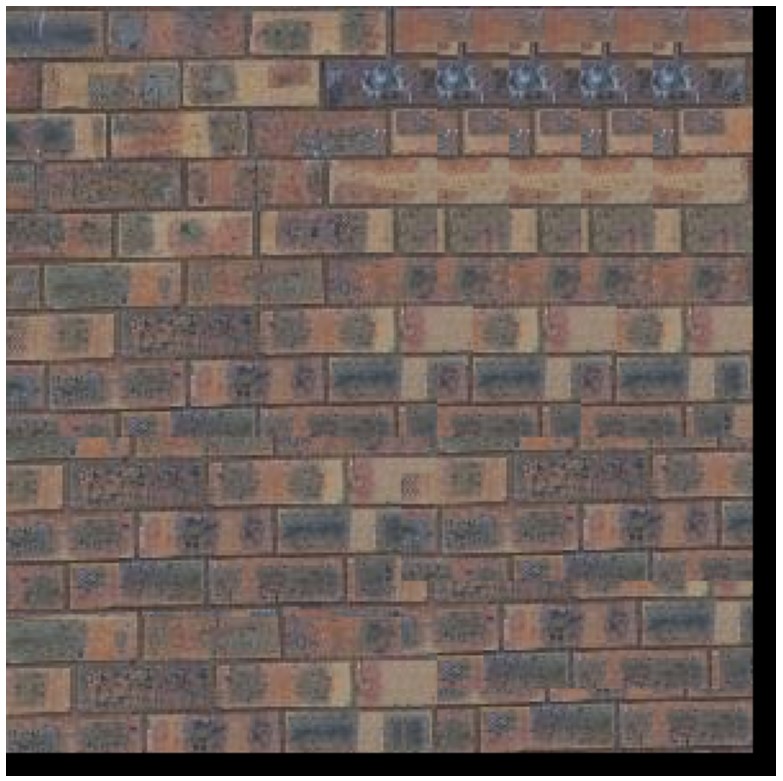
quilt simple tol=1
Seam Finding
Objective: Eliminate visible seams in overlapping patches by computing optimal seams for blending
overlapping regions.
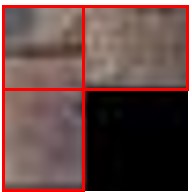
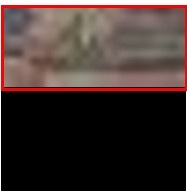
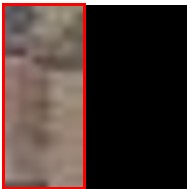
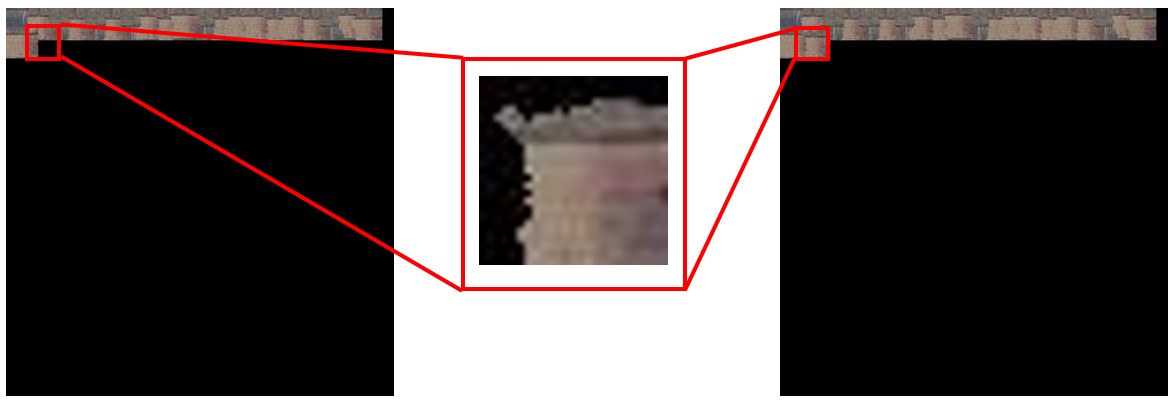
This step introduces seam finding to remove visible edge artifacts in overlapping patches. A minimum-cost path is
computed through the overlapping region, blending pixels from both patches based on similarity. To avoid obvious edges
in the stitching between patches, we find the path with the minimum cost and create a mask based on this path. The parts
of the patch corresponding to the mask value of 1 are then stitched into the image, achieving a better visual effect.
Results
patch

SSD cost
overlap
topoverlap
leftoverlap

mask

horizontal mask

vertical mask
one step
origin
output
Additional Quilting Results
Objective: Demonstrate the versatility and effectiveness of the quilting algorithm by applying it to
new input textures and producing high-quality results.
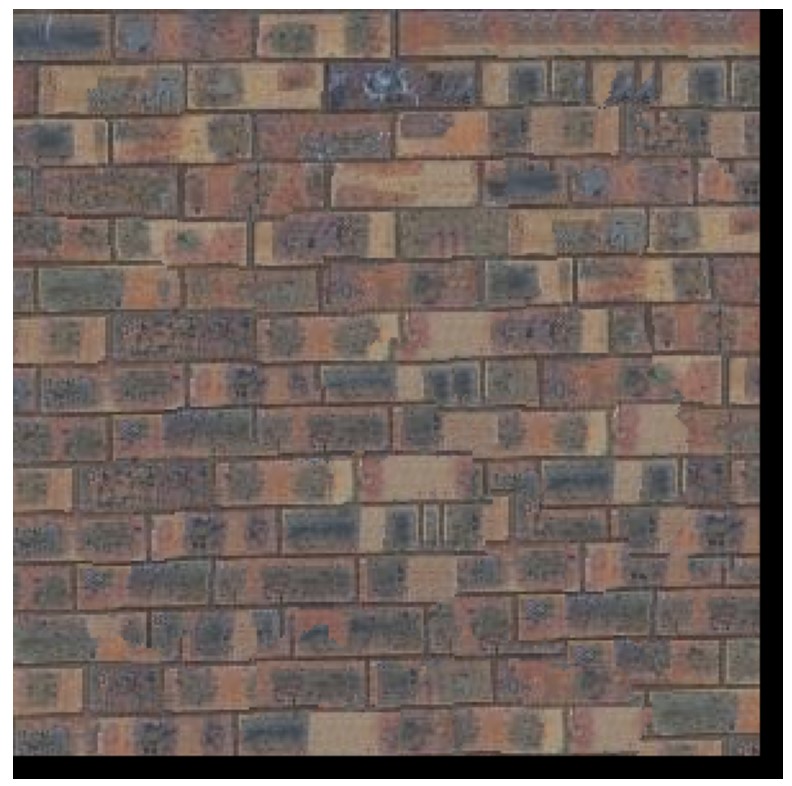
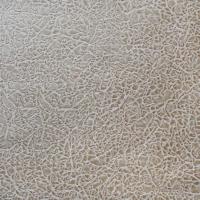
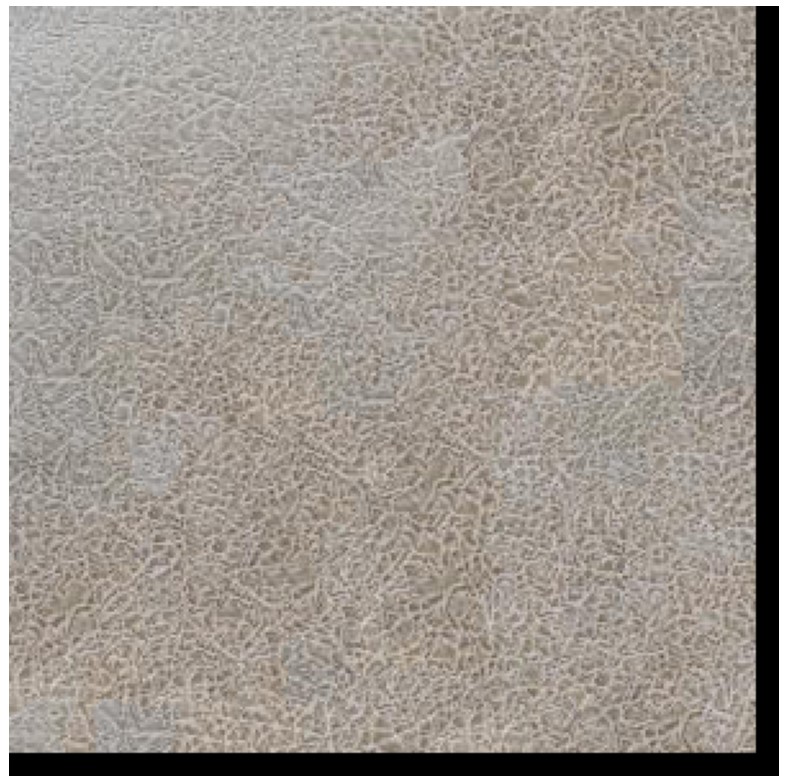
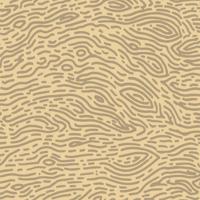
Apply the quilting algorithm (with seam finding) on different input textures to produce creative and realistic outputs.
The output images should be larger than the input texture sample to demonstrate the algorithm's scalability.
Results
origin
output
origin
output
Texture Transfer
Objective: Apply a texture to a target image while preserving the target’s structure and incorporating the
texture’s appearance.
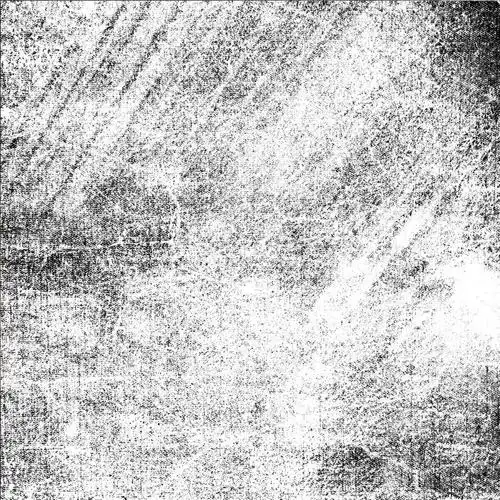
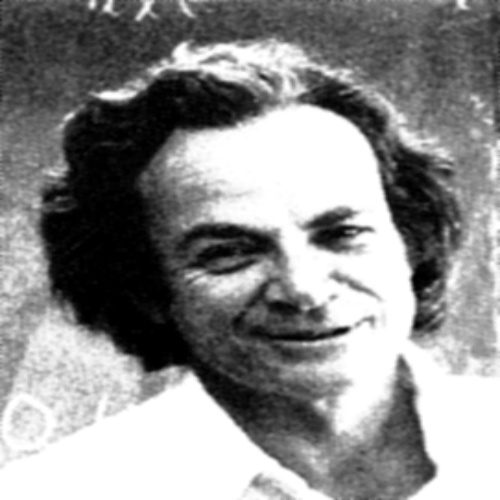
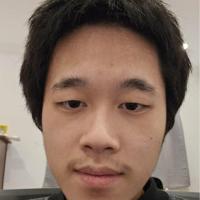
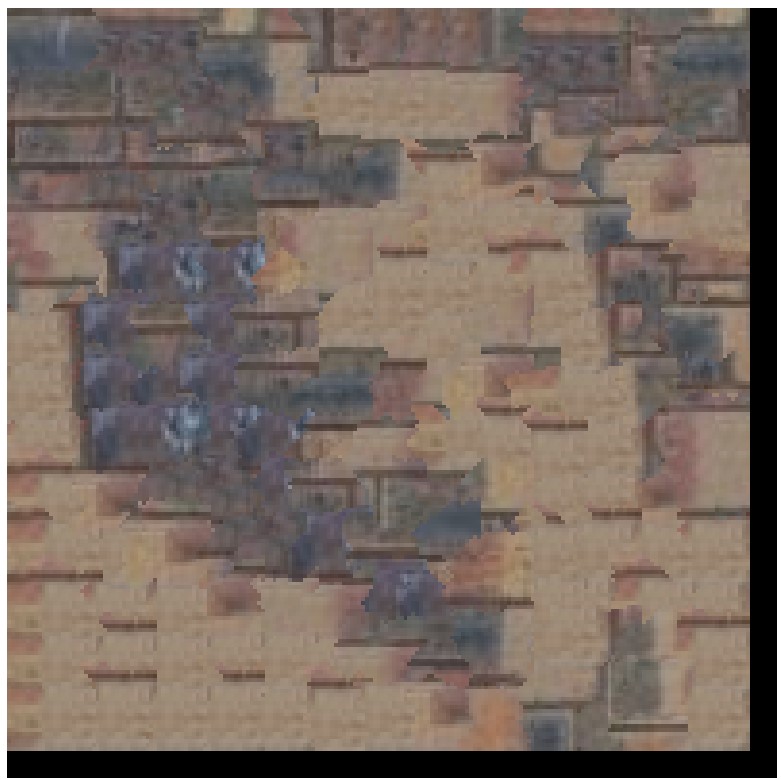
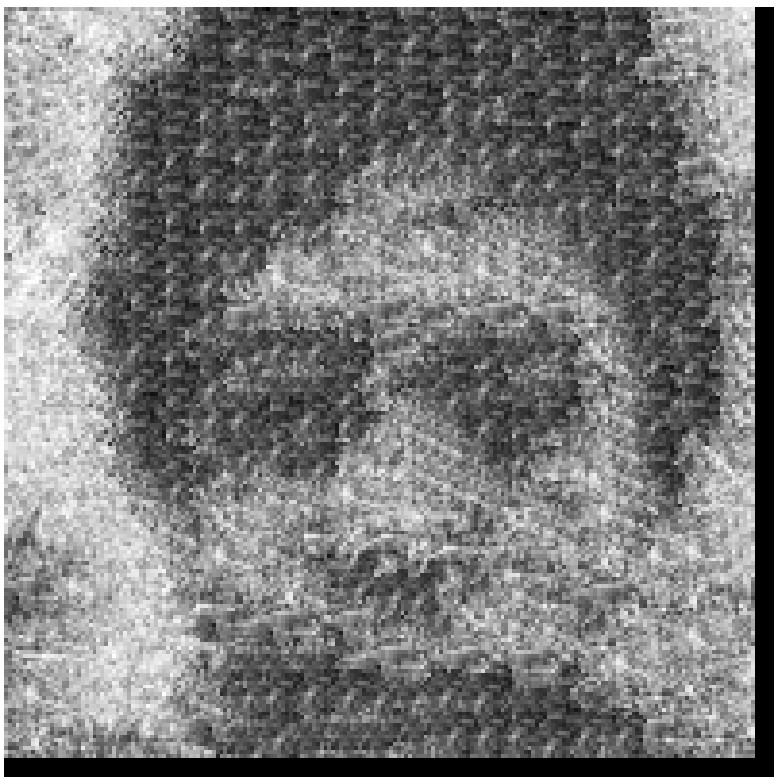
Texture transfer involves applying the texture from a source sample onto a target image, preserving the target's structure
while blending in the source texture's appearance. The implementation steps are similar to the previous section. The main
difference lies in the calculation of the SSD cost image, which also includes the difference between the output image and
the target image. For simplicity, set the output image to be the same size as the target image. During each step of generating
the output image, use the new cost to calculate the seam and mask.
Results
origin
origin
target
target
output
output
Bells & Whistles: Iterative Texture Transfer
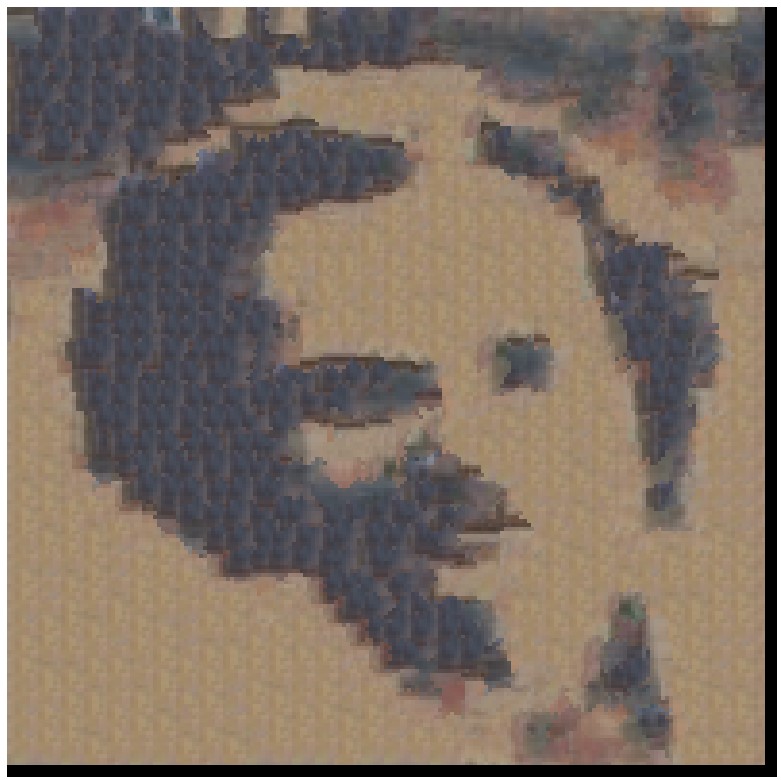
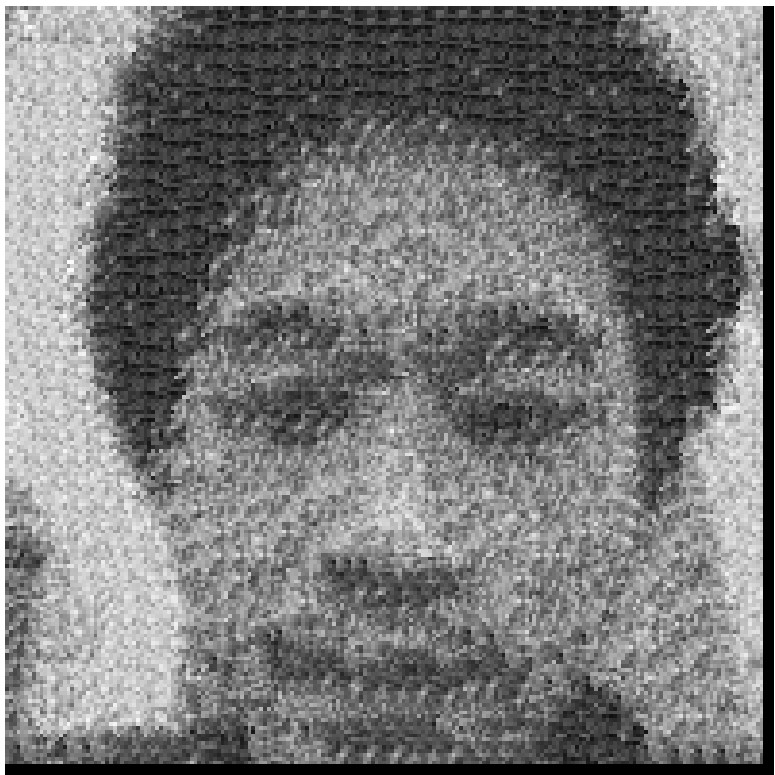
Gradually refine texture transfer results by iteratively improving the mapping between the source texture and the target image.
TThe texture transfer is performed iteratively on the target image, allowing the texture to match the target image at different scales.
By adjusting the patch size and alpha value during the iterations, better results can be achieved.
Results
texture
texture
target
target
texture transfer
texture transfer
iterative texture transfer
iterative texture transfer